
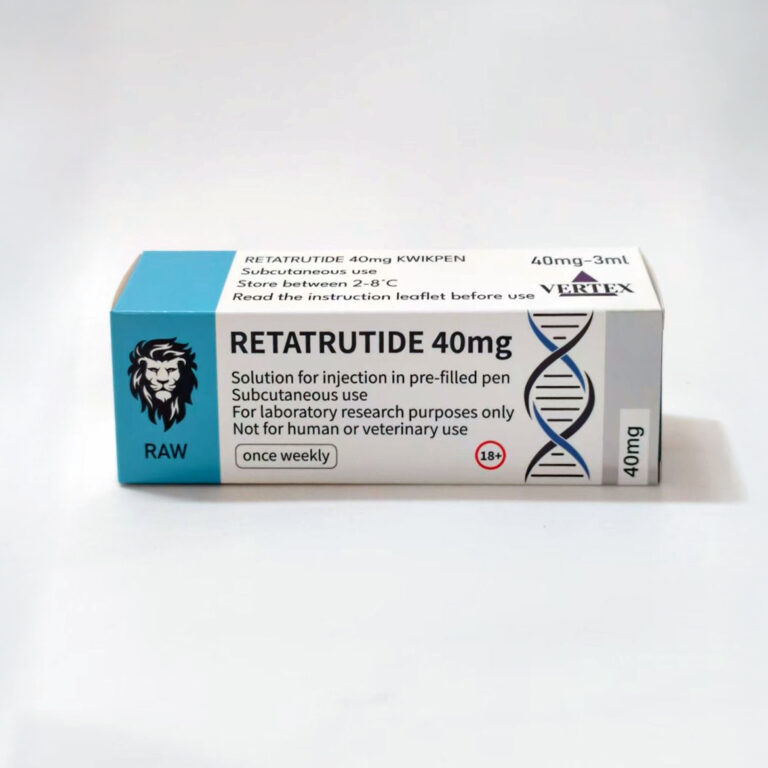
Retatrutide and Obesity Research: Mechanism, Evidence and Safety
Retatrutide is an investigational peptide being studied for obesity and related metabolic conditions. It is designed to activate three receptor systems—GLP-1, GIP and glucagon—within a single molecule.
Early clinical findings have attracted significant scientific interest, but retatrutide should not be presented as an approved obesity medicine. Regulatory approval, prescribing availability and long-term safety must be established through the appropriate clinical and regulatory processes.

Why Is Retatrutide Being Studied?
Obesity is a complex chronic condition influenced by biological, environmental, behavioural and socioeconomic factors. It is associated with increased risks of type 2 diabetes, cardiovascular disease, obstructive sleep apnoea, osteoarthritis and metabolic liver disease.
Retatrutide is being studied because its three-receptor mechanism may affect appetite regulation, glucose metabolism and energy expenditure at the same time. However, its overall clinical value can be determined only by comparing benefits, adverse effects and long-term outcomes in appropriately controlled trials.
How the Triple-Agonist Mechanism Works
GLP-1 receptor activity
GLP-1 receptor agonism is associated with glucose-dependent insulin secretion, reduced glucagon secretion, delayed gastric emptying and signalling involved in appetite and satiety. The degree and duration of each effect can vary by compound, dose and individual response.
GIP receptor activity
GIP is another incretin hormone involved in post-meal insulin signalling and nutrient metabolism. Researchers are investigating how combined GLP-1 and GIP receptor activity may influence metabolic responses differently from GLP-1 activity alone.
Glucagon receptor activity
Glucagon receptor activation can affect hepatic glucose production, lipid metabolism and energy expenditure. This pathway also introduces an important scientific balancing question: researchers must evaluate whether the potential metabolic benefits offset effects that could increase glucose production or create other safety concerns.
The proposed effect of retatrutide therefore comes from the balance among all three pathways—not from a simple or guaranteed “fat-burning” action.
What Did the Phase 2 Obesity Trial Find?
A randomised Phase 2 trial published in the New England Journal of Medicine evaluated retatrutide in 338 adults with obesity or overweight and at least one weight-related condition. Participants did not have diabetes.
| Study group | Mean weight change | Important context |
|---|---|---|
| Retatrutide 8 mg | Approximately −22.8% | Investigational once-weekly study regimen |
| Retatrutide 12 mg | Approximately −24.2% | Highest maintenance dose studied in this trial |
| Placebo | Approximately −2.1% | Comparator group |
These figures are group averages from a controlled study. They are not a prediction of what any individual will experience. The trial was relatively short for assessing lifelong obesity treatment and was not designed to resolve every question about long-term cardiovascular, pancreatic, gallbladder or other safety outcomes.
Metabolic Findings Beyond Body Weight
Published studies have also examined changes in measurements such as waist circumference, blood pressure, blood glucose, lipids and liver fat. These findings are scientifically important, but they should not be interpreted as proof that retatrutide prevents or treats a particular disease before the relevant endpoints and safety outcomes have been adequately established.
- Waist circumference: reductions were observed alongside overall weight change.
- Blood pressure: average improvements were reported in some study groups.
- Glucose-related measurements: changes were consistent with the compound’s incretin-receptor activity.
- Liver fat: separate research has investigated potential reductions in hepatic fat among selected participants.
Safety and Limitations
The most frequently reported adverse events in the Phase 2 obesity trial were gastrointestinal. These were generally mild to moderate, occurred more often during dose escalation and were more common in higher-dose groups.
- Nausea
- Diarrhoea
- Vomiting
- Constipation
- Reduced appetite
Dose-dependent increases in heart rate were also observed. Larger and longer studies are needed to characterise uncommon adverse events, treatment discontinuation, weight regain after treatment and long-term cardiovascular outcomes.
Important Safety Notice
This article is educational and does not provide medical advice, personal dosing instructions or a recommendation to use retatrutide. Products labelled “research use only” must not be used as substitutes for authorised medicines or administered to humans.
Is Retatrutide Approved in the UK?
Retatrutide is an investigational compound. Readers should consult the official Medicines and Healthcare products Regulatory Agency for current UK authorisation information.
An investigational compound sold as a laboratory research material is not an authorised obesity treatment. Descriptions such as “compounded,” “research-grade” or “independently tested” do not make a product approved, clinically appropriate or safe for personal use.
Frequently Asked Questions
Is retatrutide the same as semaglutide?
No. Semaglutide primarily activates the GLP-1 receptor. Retatrutide is designed to activate GLP-1, GIP and glucagon receptors.
Was 24 mg used in the main Phase 2 obesity trial?
No. The highest weekly maintenance dose in the published Phase 2 obesity trial was 12 mg. The figure 24.2% refers to the mean weight reduction reported at 48 weeks in that study group.
Does early trial success mean retatrutide is safe for personal use?
No. Early and mid-stage trials cannot replace regulatory review, medical-product quality controls or long-term safety evidence.
Can a research-only product be used for weight management?
No. Research-only materials are not authorised medicines and must not be administered to humans or used for self-treatment.
Scientific Sources and Further Reading
- Jastreboff AM, et al. Triple-Hormone-Receptor Agonist Retatrutide for Obesity: A Phase 2 Trial . New England Journal of Medicine, 2023.
- Retatrutide and emerging obesity therapies . Springer Nature.
- Retatrutide benefits and risks: independent news coverage . Diabetes.co.uk.

 Español de México
  English
  Deutsch
  Español
  English (Australia)
  Français du Canada